AI Safety & Ethics: First Principles for the Next Generation
Why Ngao Labs prioritizes responsible AI and bias reduction as a foundational pillar of our curriculum.
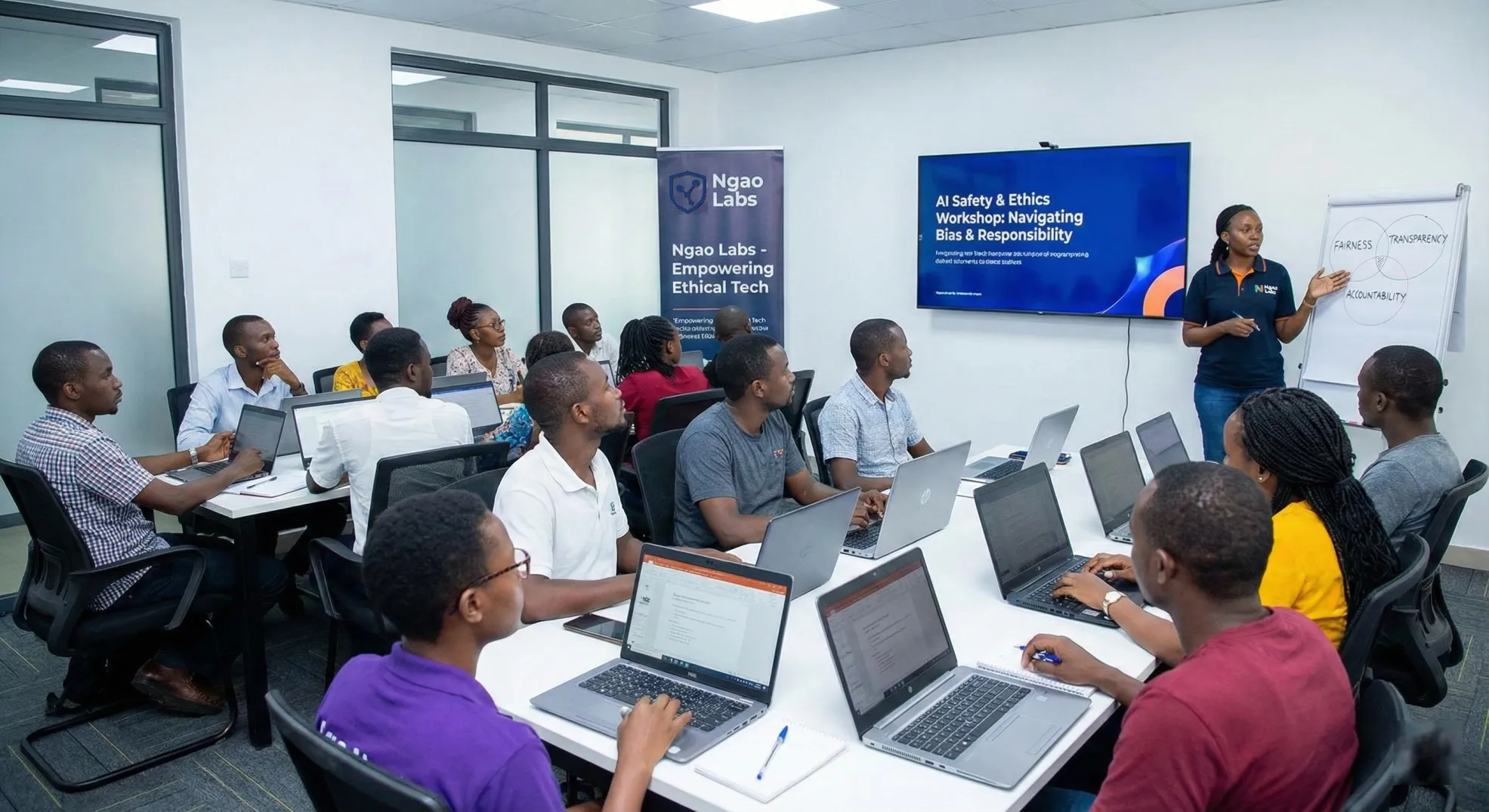
"The power of AI comes with a profound responsibility. We aren't just teaching code; we are teaching the stewardship of data."
Responsible AI is Not Optional
In the global rush to build increasingly powerful models, ethics is often relegated to an afterthought—a box to be checked at the end of a project. At Ngao Labs, we've flipped this script. We introduce responsible AI concepts in Week 1 and weave them through every subsequent module until graduation.
We challenge our learners to look beyond the F1 scores and RMSE values to ask the difficult, human questions that truly define a model's success:
- Representational Fairness: Does this dataset represent the diversity of the population fairly, or is it skewed toward a specific demographic?
- Historical Bias: Is the model simply reinforcing existing social inequities present in historical data?
- Privacy by Design: How are we protecting the identity and dignity of the individuals behind the data points?
From Theory to Practice
As we prepare to transition our top capstone projects into the Incubation Programme, fairness vetting becomes a hard requirement. A model that is 99% accurate but discriminates against a specific group is, by our standards, a failure.
By embedding these principles into our peer-to-peer learning model, we are ensuring that the next wave of African tech leaders doesn't just build faster systems—they build better ones.